
Who We Are
Beam test facilities have long played a vital role in advancing accelerator science and technology, supporting both fundamental research and applications that drive future projects and large user facilities. Despite their importance, awareness of these facilities and their unique capabilities remain limited, and many potential researchers are unsure how to begin working with them.
As a network, we are deeply committed to workforce development and interdisciplinary collaboration across academia, industry, and national laboratories. Individually, each facility contributes to innovation and discovery — but together, we can more effectively raise awareness, share expertise, and welcome new participants to the field.
We recognize that even when researchers know about our facilities, getting started can be challenging. How does one make initial contact, develop an experimental plan, or navigate the proposal process? To help bridge that gap, we are launching a new access program that connects prospective users with facility staff and expertise, making it easier to establish collaborations and initiate experiments.
The third BeamNetUS call for proposals closed on November 30th 2026. All beamtime awards made so far can be found under —> Science Highlights.
We invite you to let us know of your interest by completing the Contact Us form. You may also reach out directly to the network chairs and coordinator through their institutional email addresses.

BeamNetUS Chairs
Dr. Emma Snively (Chair) SLAC National Accelerator Laboratory

Dr. Emma Snively is the Department Head for Accelerator Research and Technology within the Technology Innovation Directorate at SLAC National Accelerator Laboratory and the Operations Manager for the NLCTA test facility at SLAC. She received her PhD in 2018 from UCLA in the Particle Beam Physics Laboratory. Dr. Snively’s research has focused on the development of next generation of high-gradient accelerator technology and novel beam manipulation techniques, with an emphasis on compact accelerator applications in medicine. Her research interests include high frequency accelerator design, pushing beyond the RF frequency range of conventional beam manipulation to enable more compact, high rep-rate, high efficiency structures, and to find new applications for THz science.
Dr. Qing Ji (Deputy Chair) Lawrence Berkeley National Laboratory

Dr. Qing Ji is a Staff Scientist and Head of the Berkeley Accelerator Controls and Instrumentation Program in the Accelerator Technology and Applied Physics (ATAP) Division at Lawrence Berkeley National Laboratory (LBNL). Previously, she served as Deputy Program Head of the Fusion Science & Ion Beam Technology Program in ATAP from 2019-2023. She joined LBNL in 2005 as a research scientist. Dr. Qing Ji received her PhD in Electrical Engineering from UC Berkeley in 2003 and subsequently conducted postdoctoral research at Harvard University from 2003-2005. Her research spans advanced accelerators, ion sources and ion beam technology, and accelerator controls and instrumentation, with a focus on developing innovative technologies for accelerator science and applications. She holds eight U.S. patents and has received an R&D 100 Award (2012) and the LBNL Director’s Achievement Award in Science (2018).
Coordinator for Outreach and User Engagement
Dr. Lieselotte Obst-Huebl, Lawrence Berkeley National Laboratory

Dr. Lieselotte (Lotti) Obst-Huebl is a research scientist at the Berkeley Lab Laser Accelerator (BELLA) Center where she is the lead for high energy density science experiments. She conducts experiments and supports user campaigns at the BELLA laser systems. Dr. Obst-Huebl first started working in the field of high power lasers and plasmas as an undergraduate intern at Helmholtz-Zentrum Dresden-Rossendorf in 2010 and received her PhD magna cum laude in Physics at Technische Universität Dresden in 2019. Her expertise lies in PW laser-matter interactions, including laser-proton acceleration, targetry, plasma mirrors, diagnostics, and applications. One of her focus areas is providing laser-accelerated particle beams for radiobiological studies to explore new radiotherapy regimes.

Administration
MJ Ilardi
(Brookhaven National Laboratory)

Nicole Ramistella
(Brookhaven National Laboratory)
Chair of the Peer Review Panel (PRP)
Dr. Patric Muggli, Max Planck Institute For Physics Munich

Patric Muggli is the leader of the AWAKE group at the Max Planck Institute for Physics in Munich, Germany. He received his Ph.D. from the École Polytechique Fédérale in Lausanne, Switzerland. His research focuses on plasma wakefield accelerators. He is chair of the Physics Board of the AWAKE experiment and is leading the experimental program. He is a Fellow of the American Physical Society and of the Institute of Electrical and Electronics Engineers (IEEE); he is also an IEEE Nuclear Plasma Science Society Distinguished Lecturer.
Former Chairs
FY26 Chair: Philippe Piot Argonne National Laboratory
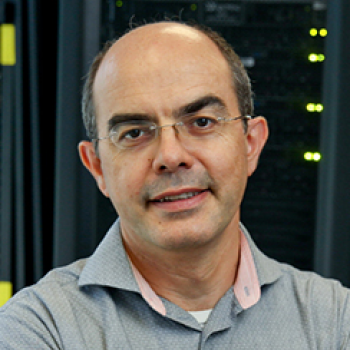
FY23-25 Chair: Navid Vafaei-Najafabadi Stony Brook University

FY23-25 Deputy Chair: Jens Osterhoff Lawrence Berkeley National Laboratory
